Overview
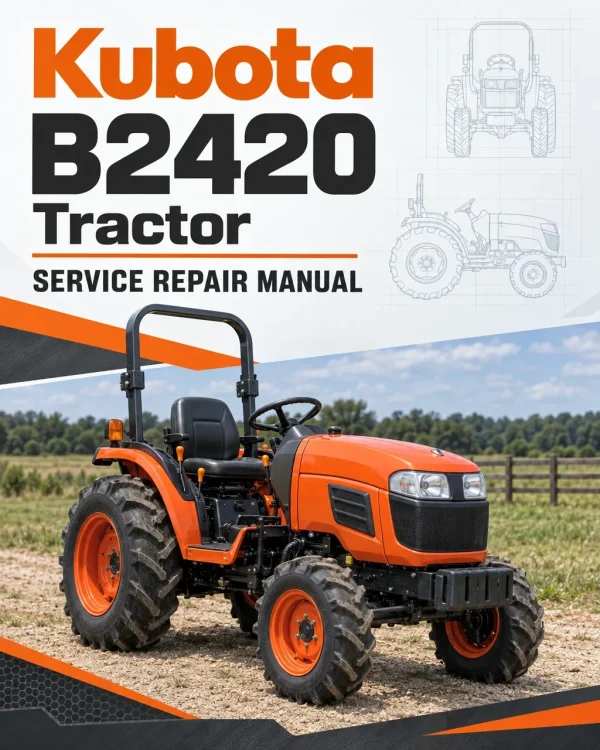
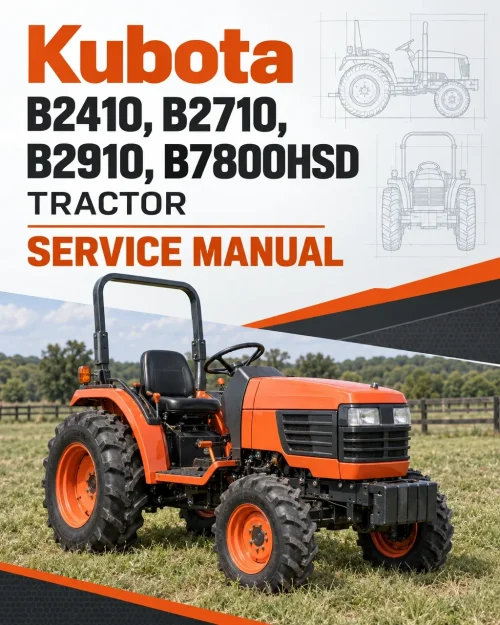
The Kubota B2420 Tractor Workshop Service Manual provides technical documentation for maintenance, troubleshooting, inspection and component repair of this Kubota compact tractor. The workshop reference covers engine lubrication, cooling and fuel systems, clutch, mechanical transmission, rear axle, brakes, front axle, integral power steering, three-point hitch hydraulics and electrical equipment. Its mechanism and servicing sections provide component construction, operating principles, technical specifications, checking, adjustment, disassembly and repair procedures.
The documentation includes engine fuel-injection servicing, Hi-Mid-Lo gear transmission, power take-off (PTO) mechanisms, differential repairs, hydraulic pump testing and steering controller inspection. The hydraulic chapter addresses three-point hitch position control, relief valves and auxiliary hydraulic connections, while electrical references distinguish starting and charging circuits for tractors with and without Operator Presence Control (OPC). General information provides maintenance schedules, lubricants, tightening torques, tyre specifications, special service tools and implement limitations.
Notice: The Electrical System chapter identifies separate wiring diagrams and starting circuits for tractors with and without OPC, distinguished by serial-number ranges. Verify the tractor serial number and installed safety-control equipment before selecting electrical diagrams, starting-system checks or repair procedures.
Table of Contents
Kubota B2420 Manual
-
01. Information
- Safety First and Workshop Safety Instructions
- Tractor Safety Decals and Warning Labels
- Tractor Technical Specifications
- Tractor Travelling Speeds
- Machine Dimensions
-
02. General
- Tractor Identification
- Model Name and Serial Number Identification
- Engine Cylinder Number Identification
- General Workshop Precautions
- Electrical Wiring and Component Handling Precautions
- Battery, Fuse and Electrical Connector Precautions
- Circuit Tester Handling Instructions
- Electrical Wiring Colour Identification
- Lubricants, Fuel and Coolant Requirements
- General Fastener Tightening Torques
- Stud Bolt Tightening Specifications
- Metric Screw, Bolt and Nut Specifications
- UNC and UNF Threaded Fastener Specifications
- Plug Tightening Torques
- Tractor Maintenance Checklist
- Daily Inspection and Maintenance
- Initial 50-Hour Maintenance
- Periodic Maintenance — Every 50 Hours
- Periodic Maintenance — Every 100 Hours
- Periodic Maintenance — Every 200 Hours
- Periodic Maintenance — Every 400 Hours
- Periodic Maintenance — Every 800 Hours
- 1,500-Hour Maintenance Checks
- 3,000-Hour Maintenance Checks
- Annual and Two-Year Maintenance Requirements
- Additional Maintenance and Service Checks
- Special Service Tools for Engine Repair
- Special Service Tools for Tractor Components
- Tyre Inflation Pressure
- Front and Rear Wheel Tread Adjustment
- Liquid Tyre Ballast
- Implement Limitations
-
03. Engine — Mechanism and Servicing
- Engine Lubricating System Construction
- Engine Cooling System Construction
- Engine Fuel System Construction
- Engine Troubleshooting
- Engine Servicing Specifications
- Engine Tightening Torques
- Engine Body Checking and Adjustment
- Engine Lubricating System Inspection
- Cooling System Checking and Adjustment
- Fuel System Checking and Adjustment
- Engine Separation from Tractor
- External Engine Component Removal
- Cylinder Head and Valve Disassembly
- Timing Gear, Camshaft and Fuel Camshaft Disassembly
- Piston and Connecting Rod Disassembly
- Flywheel and Crankshaft Disassembly
- Thermostat and Water Pump Disassembly
- Fuel Injection Nozzle Disassembly and Assembly
- Cylinder Head and Valve Inspection and Servicing
- Timing Gear, Camshaft and Governor Gear Servicing
- Piston and Connecting Rod Inspection and Servicing
- Crankshaft Inspection and Servicing
- Engine Cylinder Inspection and Servicing
- Engine Oil Pump Servicing
- Thermostat Inspection and Servicing
-
04. Clutch — Mechanism and Servicing
- Clutch Linkage Mechanism
- Clutch System Troubleshooting
- Clutch Servicing Specifications
- Clutch Tightening Torques
- Clutch Checking and Adjustment
- Engine Separation from Clutch Housing
- Clutch Disassembly and Assembly
- Clutch Component Inspection and Servicing
-
05. Transmission — Mechanism and Servicing
- Transmission Construction and Structure
- Travelling System Power Train
- Main Gear Shift Section
- Hi-Mid-Lo Gear Shift Section
- Front-Wheel-Drive Transmission Section
- Power Take-Off (PTO) Gear Transmission
- PTO Shift Mechanism
- Transmission Shifting Linkage
- Transmission Troubleshooting
- Transmission Servicing Specifications
- Transmission Tightening Torques
- Clutch Housing Separation
- Center Frame and Transmission Assembly Separation
- Clutch Housing Disassembly
- Transmission Case Disassembly
- Differential Gear Case Disassembly
- Clutch Housing Component Servicing
- Transmission Case Inspection and Servicing
- Differential Gear Inspection and Servicing
-
06. Rear Axle — Mechanism and Servicing
- Rear Axle Construction
- Rear Axle Troubleshooting
- Rear Axle Tightening Torques
- Rear Axle Service Preparation
- Rear Axle Case Separation
- Rear Axle Case Disassembly
- Rear Axle Component Inspection and Servicing
-
07. Brakes — Mechanism and Servicing
- Brake Linkage Mechanism
- Brake System Operating Principles
- Brake System Troubleshooting
- Brake Servicing Specifications
- Brake Tightening Torques
- Brake Checking and Adjustment
- Brake Pedal Disassembly and Assembly
- Rear Axle Case Separation for Brake Servicing
- Rear Axle Case Disassembly
- Brake Component Inspection and Servicing
-
08. Front Axle — Mechanism and Servicing
- Front Axle Construction
- Front Axle Troubleshooting
- Front Axle Servicing Specifications
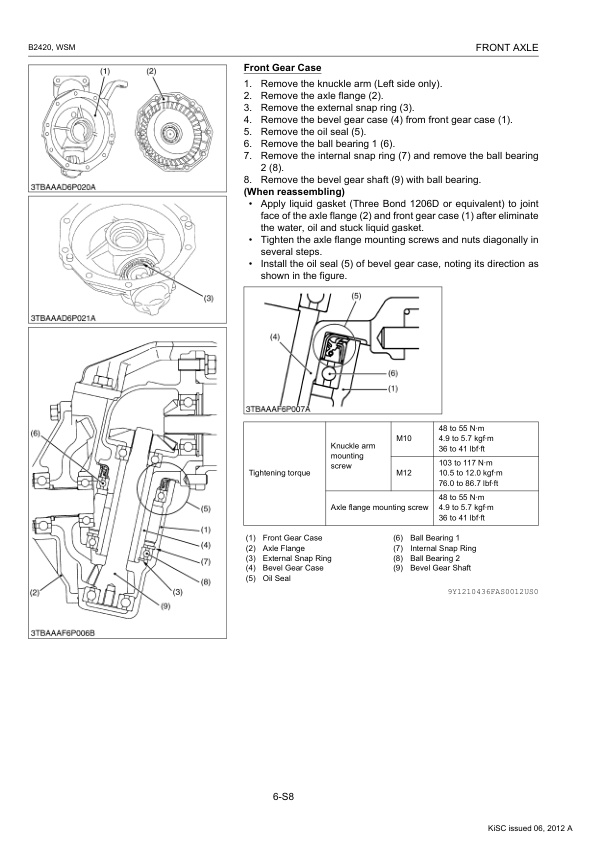
- Front Axle Tightening Torques
- Front Axle Checking and Adjustment
- Front Axle Separation and Removal
- Front Axle Disassembly and Assembly
- Front Axle Component Inspection and Servicing
-
09. Integral Power Steering System
- Integral-Type Steering Linkage
- Integral Power Steering Construction
- Power Steering Hydraulic Circuit
- Power Steering Body and Internal Components
- Steering Hydraulic Oil Flow
- Integral Steering Mechanism and Operation
- Steering System Troubleshooting
- Steering Servicing Specifications
- Steering Tightening Torques
- Power Steering System Checking and Adjustment
- Power Steering Hydraulic Pump Inspection
- Power Steering Pump Removal and Preparation
- Steering Controller Assembly Separation
- Power Steering Hydraulic Pump Disassembly
- Power Steering Controller Body Disassembly
- Power Steering Hydraulic Pump Servicing
- Steering Controller Body Inspection and Servicing
-
10. Hydraulic System and Three-Point Hitch
- Tractor Hydraulic Circuit Diagram
- Hydraulic Oil Flow
- Hydraulic Pump Construction
- Three-Point Hitch Hydraulic System
- Three-Point Hitch Feedback Linkage
- Hydraulic Control Valve
- Hydraulic Relief Valve
- Three-Point Hitch Hydraulic Cylinder
- Auxiliary Hydraulic System
- Hydraulic Block-Type Outlet
- Hydraulic System Troubleshooting
- Hydraulic Servicing Specifications
- Hydraulic Tightening Torques
- Three-Point Hitch Hydraulic Pump Checking and Adjustment
- Hydraulic Relief Valve Checking
- Hydraulic Lift Arm Checking and Adjustment
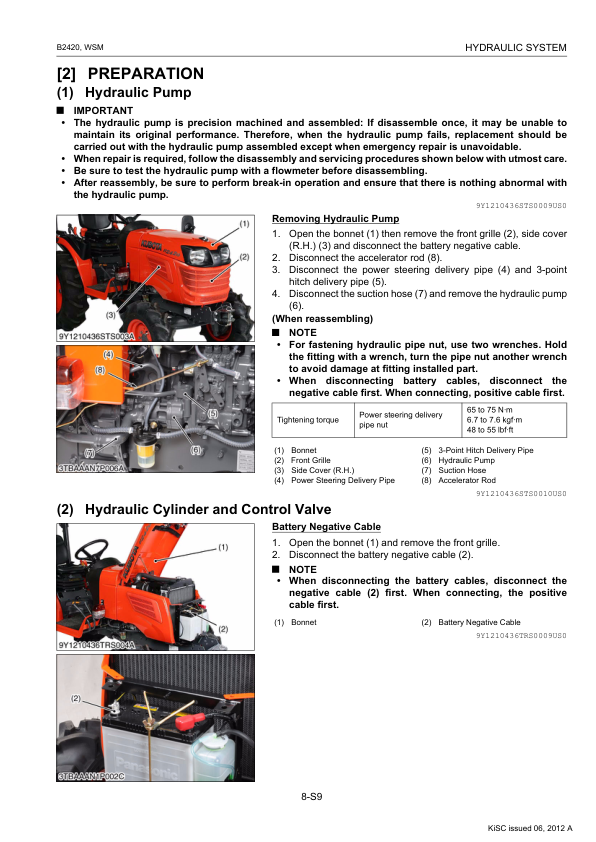
- Hydraulic Pump Service Preparation
- Hydraulic Cylinder and Control Valve Removal Preparation
- Hydraulic Pump Disassembly and Assembly
- Hydraulic Cylinder Disassembly and Assembly
- Hydraulic Control Valve Disassembly and Assembly
- Hydraulic Pump Component Servicing
- Hydraulic Cylinder Inspection and Servicing
-
11. Electrical System and OPC Diagnostics
- Electrical Wiring Diagram — Without OPC
- Electrical Wiring Diagram — With OPC
- Starting System — Without OPC
- Starting System — With OPC
- Engine Starting Conditions and Automatic Engine Stop
- Starter Motor Construction
- Starting Safety Switches
- Engine Glow Plug System
- Key Stop Solenoid
- Battery Charging System — Without OPC
- Battery Charging System — With OPC
- IC Voltage Regulator
- Headlamp Electrical Circuit
- Turn Signal and Hazard Lamp Circuits
- Brake Lamp Circuit
- Easy Checker Monitoring System
- Fuel Level Sensor
- Coolant Temperature Sensor
- Trailer Electrical Socket
- Electrical System Troubleshooting
- Electrical Servicing Specifications
- Battery Inspection and Testing
- Main Switch Checking and Adjustment
- Electrical Relay Testing
- Glow Plug Inspection
- Main Gear Shift Lever Safety Switch
- Rear PTO Safety Switch
- Parking Brake Safety Switch
- Operator Seat Safety Switch
- OPC Controller Testing
- Key Stop Solenoid Checking
- Starter Motor Inspection
- Alternator Testing
- Combination Switch Inspection
- Flasher Relay and Turn Signal Relay Testing
- Beacon Light Relay Inspection
- Hazard Switch and Flasher Unit Testing
- Instrument Panel Inspection
- Electrical Gauge Testing
- Trailer Coupler Inspection
- Brake Lamp Inspection
- Starter Motor Disassembly and Assembly
- Alternator Disassembly and Assembly
- Starter Motor Component Servicing
- Alternator Component Servicing
OPC Serial-Number Differences and Integral Steering Service
The electrical workshop information identifies separate wiring and starting-system arrangements for tractors without OPC and those equipped with the operator-presence safety system. The index labels the non-OPC configuration for serial numbers below 33597 and the OPC configuration for serial numbers above 33598. These ranges should be checked against the machine’s serial number and installed electrical equipment. The index does not independently establish the classification of the boundary serial numbers, so the applicable circuit should be confirmed before testing or replacing electrical components.
The Steering chapter documents an integral-type power steering system, including its hydraulic circuit, internal operating mechanism, steering controller and hydraulic pump. The Hydraulic System chapter separately covers three-point hitch pump operation, feedback linkage, relief-valve checking and lift-arm adjustments. When diagnosing steering or hydraulic lifting concerns, use the corresponding pump and control-system references to distinguish the affected circuit before performing adjustments or component disassembly.


























Reviews
There are no reviews yet.