Overview
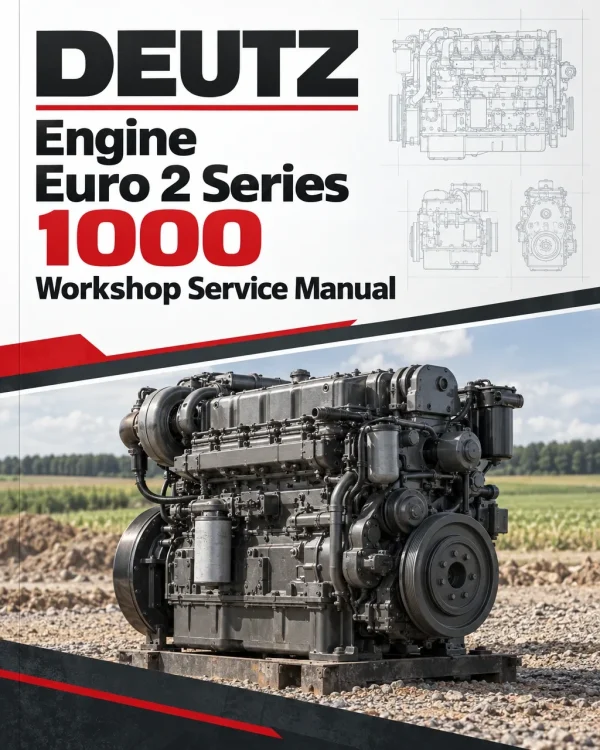
The DEUTZ Series 1000 Euro 2 Engine Workshop Service Manual provides detailed technical information for diesel engine maintenance, troubleshooting, inspection, overhaul, and component repair. The workshop documentation covers three-, four-, and six-cylinder engine configurations, including cylinder heads, pistons, connecting rods, crankshafts, valve timing mechanisms, fuel injection systems, cooling components, lubrication systems, and engine governors.
The service documentation includes engine disassembly and reassembly procedures, technical measurements, component inspection, injection pump timing, valve clearance adjustment, and engine performance testing. Detailed sections address mechanical governor servicing, electronic actuator calibration, cylinder liner installation, crankshaft inspection, fuel injection components, and engine assembly specifications, supported by special tool references, tightening torques, and technical service data.
Safety: Engine servicing requires suitable protective clothing, fuel- and oil-resistant gloves, and properly maintained tools. Clean spilled oil or fuel immediately, handle contaminated materials safely, and dispose of lubricants, seals, and other workshop waste according to applicable regulations. Follow the documented engine lifting, support, cleaning, and disassembly precautions.
Notice: The disassembly and assembly procedures use a four-cylinder engine as the main reference. Configuration-specific instructions identify differences for three- and six-cylinder engines, water-cooled, turbocharged, and intercooled versions, and components fitted only to certain engine arrangements.
Table of Contents
DEUTZ Series 1000 Euro 2 Manual
- 01. General Information and Service Preparation
- Important preliminary information
- How to consult and update the manual
- Engine lifting instructions
- Standard tightening torques for nuts and bolts
- Threadlockers, adhesives, sealants and lubricants
- Special service tools
- Measurement conversion factors
- Engine type identification and serial numbers
- Identification of injectors and injection pumps
- Determining the injection advance angle
- 02. Engine Disassembly
- Preliminary component removal operations
- Cooling and intake pipe removal
- Cylinder head removal and disassembly
- Rocker arm support disassembly
- Thermostat removal and testing
- Coolant pump removal
- Unit injection pumps and fuel lift pump removal
- Mechanical governor drive overhaul
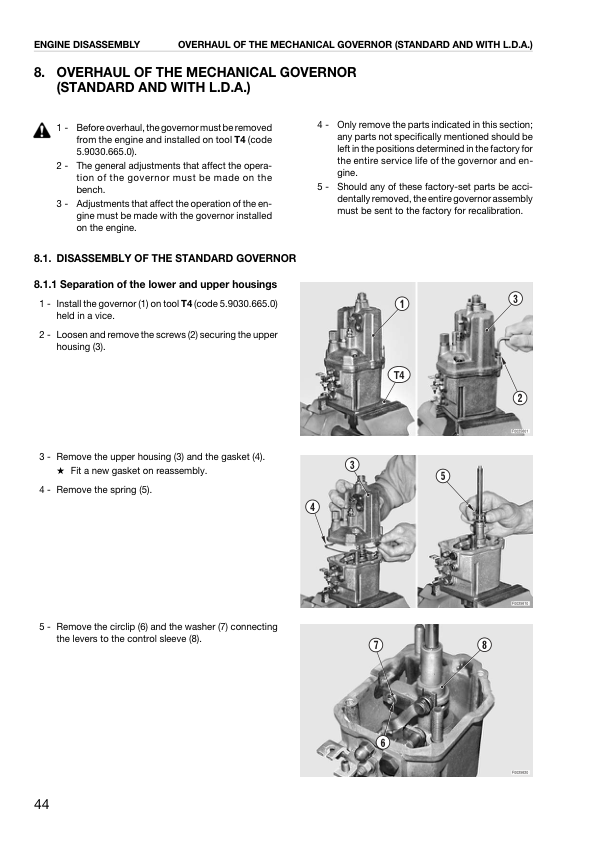
- Standard mechanical governor disassembly
- Governor with L.D.A. valve
- L.D.A. valve bench adjustment
- Mechanical governor final adjustments
- Electronic actuator adjustment and calibration
- Injection pump control rod removal
- Heat exchanger removal and disassembly
- Valve timing drive disassembly
- Crankshaft and related component removal
- Harmonic balancer removal and overhaul where fitted
- Engine oil pump disassembly
- Piston and cylinder liner removal
- Piston and connecting rod separation
- Rear crankshaft oil seal replacement
- 03. Engine Inspection, Testing and Technical Dimensions
- Cylinder head, valve and rocker assembly inspection
- Injector and injection pump technical data
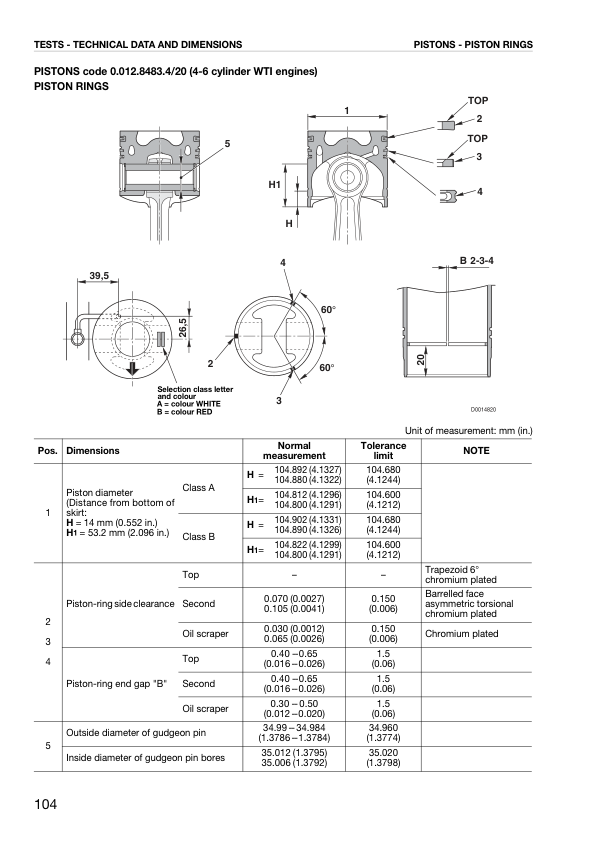
- Piston and connecting rod measurements
- Connecting rod big-end cap bolt inspection
- Crankshaft technical dimensions and inspection
- Engine block and cylinder liner measurements
- Camshaft inspection and dimensions
- Timing gear inspection
- Harmonic balancer technical checks
- Flywheel inspection and dimensions
- 04. Engine Assembly and Reassembly
- Piston cooling nozzle installation
- Cylinder liner installation
- Piston and connecting rod assembly
- Camshaft and crankshaft installation
- Connecting rod big-end assembly
- Harmonic balancer assembly where fitted
- Engine oil pump installation
- Oil sump and oil pan assembly
- Cylinder head gasket thickness selection
- Cylinder head installation
- Injection pump control rod installation
- Mechanical governor drive installation
- Electronic governor support installation
- Timing gear adjustment
- Valve timing and camshaft timing checks
- Injection pump timing
- Rocker arm assembly installation
- Valve clearance adjustment
- Injector assembly
- Final engine assembly operations
- Rear engine assembly procedures
- 05. Engine Testing and Final Adjustments
- Engine start-up testing
- Initial engine oil pressure check
- Injection pump synchronisation
Engine Identification and Overhaul Applicability
The workshop documentation identifies engine configurations through their type codes, including W for water cooling, T for turbocharging, and I for intercooling. Before servicing the fuel injection equipment or internal engine components, technicians should establish the engine type, serial number, injection pump type, injector type, and static injection advance angle. These identification details help determine the correct technical dimensions, calibration information, and applicable servicing procedures.
Engine overhaul operations are described for engines removed from their installation and secured to a suitable engine stand. The preparation instructions cover cleaning and protecting engine openings, removing obstructing accessories, and protecting machined surfaces against corrosion. Separate procedures address differences between cylinder configurations, including coolant pump and oil sump arrangements, heat exchangers, and the harmonic balancer where fitted. The documented inspection dimensions and reassembly procedures support accurate component evaluation and engine rebuilding.















Reviews
There are no reviews yet.